Without a single operational layer, teams face delays, errors, and uncertainty over whether the action was actually completed as intended
No single place to coordinatecontrol
Commands and statuses scattered across emails, phone calls, and local tools make it difficult to manage control across the portfolio.
Manual execution increases the risk of errors
Every additional manual handoff creates another opportunity for delay or misinterpretation.
Hard to confirm execution
Without a shared status view, teams cannot immediately confirm whether the event was completed as planned.
Portfolio scaling becomes costly
As the number of sites and stakeholders grows, teams quickly become overloaded without a centralized operational layer.
How does it work?
From signal to executed action
One platform connects the incoming signal, control logic, execution, and confirmation - closing the loop from decision to action
SIGNAL
Control events are triggered by negative prices, grid constraints, trading decisions, or operator instructions.
CONTROL LOGIC
The platform applies the right schedule, curtailment level, and execution parameters.
EXECUTION
Solar Spy sends remote control commands to the site and executes the planned operational action.
CONFIRMATION
Your team sees the event status, duration, reason, and execution history in one place.
Everything you need to execute remote power control
Solar Spy gives your team one environment to manage curtailments, schedule control events, and verify execution - from the portfolio level down to each individual event
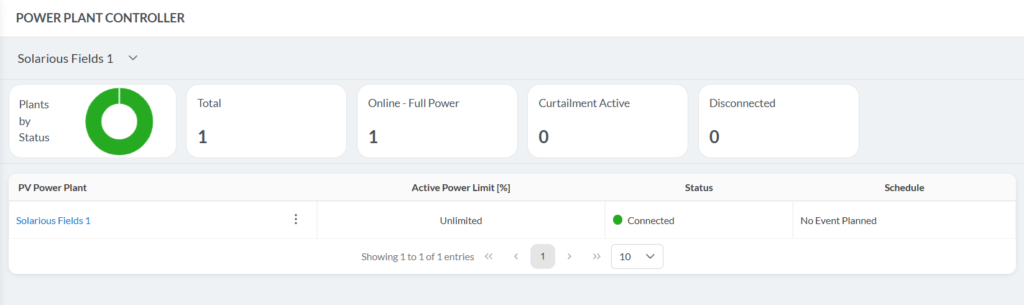
Portfolio readiness view
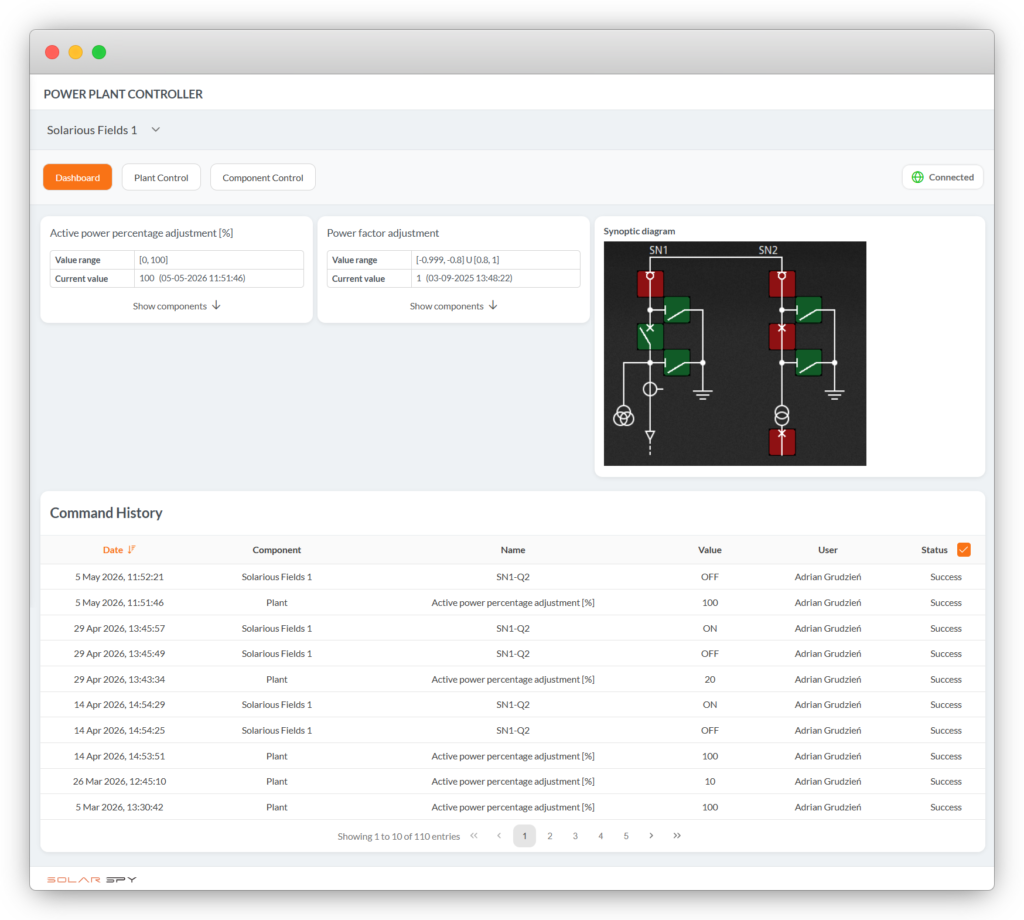
Portfolio readiness view See where curtailments are active, which sites are ready for command execution, and where your team needs to intervene.
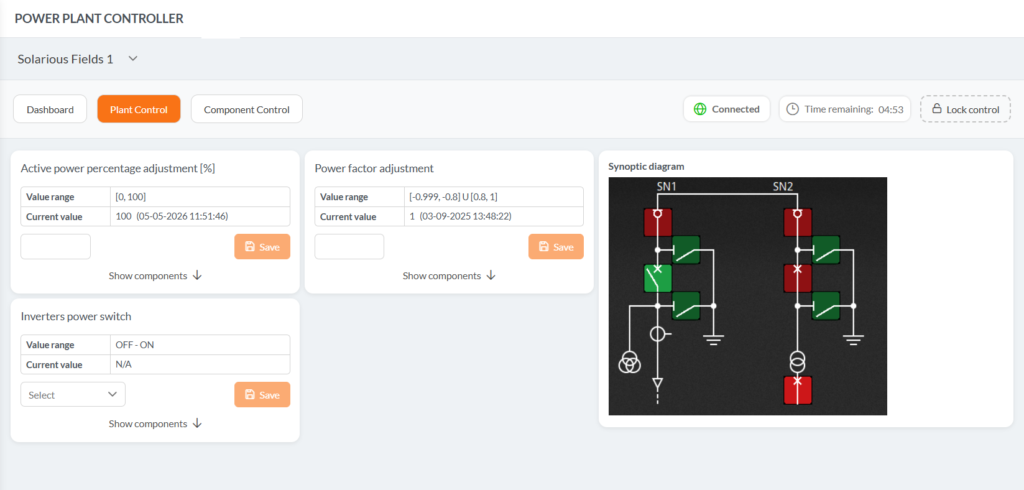
Control parameters from one place
Set active power limits and selected operating parameters without jumping between fragmented systems and local tools.
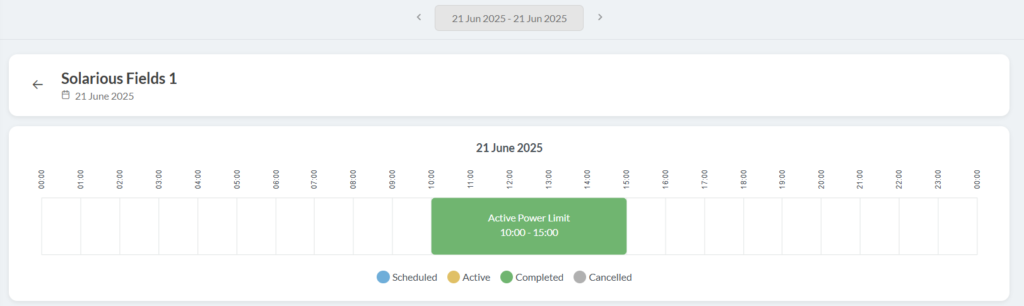
Event scheduling that keeps execution organized
Time-based control scheduling keeps actions consistent, reduces manual coordination, and gives teams better control over operations.
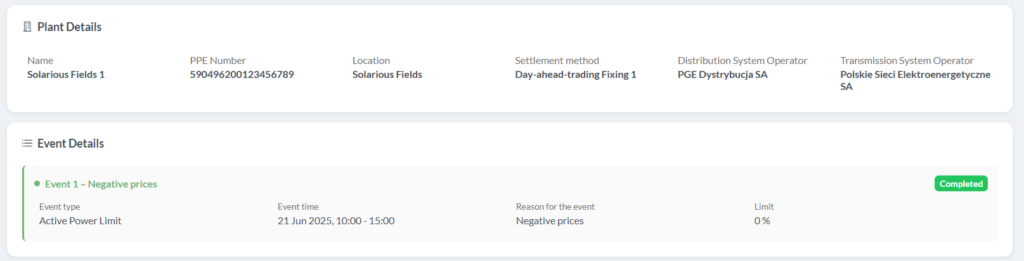
Full status and context for every event
Every event includes its reason, duration, status, and history, so your team sees not only the command, but also whether it was actually executed.
How it works in a distributed PV portfolio?
Nordic Solar implemented Solar Spy as the central operational layer for a 117-site portfolio in Poland
117 plants under one operating standard
Solar Spy connected trading decisions with the physical operation of PV plants. The entire portfolio was connected to the system in just 2 months.
We turned a distributed, manual process into a centrally managed operating model that knows when to curtail production and how to execute that decision across the portfolio.
Centralized execution of control commands across the portfolio
Automation with optional human oversight
Consistent operational execution across multiple sites
Closed loop between market decision-making and physical plant control
What remote power control gives you ?
Less manual coordination, faster execution, and greater control over your entire PV portfolio
Faster response to market signals
Curtail production when market conditions or trading strategy require it.
Consistent execution across sites
One control logic works across the portfolio, without manually forwarding commands to each site.
Full visibility into event status
See which operations are scheduled, active, completed, or cancelled.
Better alignment between trading and operations
Turn market decisions directly into operational execution.
Fewer operational errors
Automation reduces the risk of mistakes caused by manual curtailment workflows.
Built to scale
The same approach works for individual PV plants and distributed portfolios.
Frequently Asked Questions
What is Solar Spy's remote power control for photovoltaic farms?
It’s a system that translates market signals, grid restrictions, and operator commands into actually executed operational actions. Instead of manually passing commands to each farm individually, the team manages power control from one centralized place.
What problems does Solar Spy's remote power control solve?
Four main ones: no single place to coordinate control (commands and statuses scattered across emails, phone calls, and local tools), manual execution of commands increasing the risk of errors, difficulty confirming whether a curtailment was executed correctly, and costly scaling to many farms and stakeholders without a centralized operational layer.
What's the path from signal to automatic response?
The process has four steps: signal (resulting from negative prices, grid restrictions, trading arrangements, or an operator command), control logic (the platform assigns the schedule, curtailment scope, and execution parameters), execution (Solar Spy remotely transmits control to the site), and confirmation (the team sees the event status, duration, reason, and execution history in one place).
What does the portfolio and operational readiness view include?
It shows where curtailments are active, which sites are ready to execute commands, and where the team needs to step in – all in one place, at the level of the entire portfolio.
How does parameter control work from the platform?
The team sets active power limits and selected operating parameters directly in Solar Spy, without having to switch between scattered systems and local tools for each site.
What is the event schedule used for?
Scheduling control over time helps keep actions consistent, reduces manual coordination, and gives better control over how operations play out across every site in the portfolio.
How did Nordic Solar use Solar Spy to manage a distributed portfolio?
Nordic Solar deployed Solar Spy as the central operational layer for a portfolio of 117 sites in Poland, connecting the world of trading with the physics of photovoltaic farms. The entire portfolio was connected to the system within 2 months, turning a scattered, manual process into a centrally managed model that knows when to curtail production and how to enforce the decision across the whole portfolio.
Does remote control mean full automation with no room for manual intervention?
No. Solar Spy offers automation with an optional manual oversight, so the team keeps control and can step in when needed, while still benefiting from consistent execution of operational actions across multiple locations.
What real benefits does implementing remote power control bring?
Six main ones: faster response to market signals, consistent execution across multiple sites without manually passing commands to each one, full visibility into event status (scheduled, active, completed, or canceled), better alignment between trading and operations, fewer operational errors, and a model ready to scale – from a single farm to a distributed portfolio.